


Introduction
Wordle is a popular word puzzle that challenges players to discover a hidden five-letter word using a limited number of guesses. Its simple rules make it easy for beginners to understand, while the limited attempts create enough challenge to keep experienced players interested. Instead of requiring complicated controls or advanced gaming knowledge, Wordle focuses entirely on vocabulary, spelling, deduction, and logical thinking. Players enter a five-letter word and receive visual clues that indicate whether individual letters are correct, present in another position, or absent from the answer. Learning how to play Wordle is therefore less about memorizing a complicated system and more about understanding how to interpret these clues effectively. With a good starting strategy, careful observation, and logical elimination, players can gradually improve their ability to solve the daily puzzle without relying entirely on random guesses.
What Is Wordle?
Wordle is a word-guessing puzzle centered around a hidden five-letter answer. The objective is to identify that answer within a limited number of attempts. Each guess must contain five letters, and after submitting it, the game provides clues about the letters in that guess.
The appeal of Wordle comes from its simplicity. There are no complicated levels, characters, maps, or controls. The challenge comes from choosing useful words and interpreting information correctly. Every guess can provide clues that narrow down the possible answers. This creates a small logical puzzle in which players gradually move from uncertainty toward a solution.
How to Play Wordle
Understanding how to play Wordle begins with knowing the basic guessing system. Players enter a five-letter word and submit it as their first attempt. The game then changes the appearance of the letters to provide information about the hidden word.
A correctly placed letter receives one type of indication, while a correct letter in the wrong position receives another. Letters that do not appear in the answer receive a different indication. Players use these clues to modify their next guesses. The objective is to identify the complete word before using all available attempts.
Understanding the Letter Colors
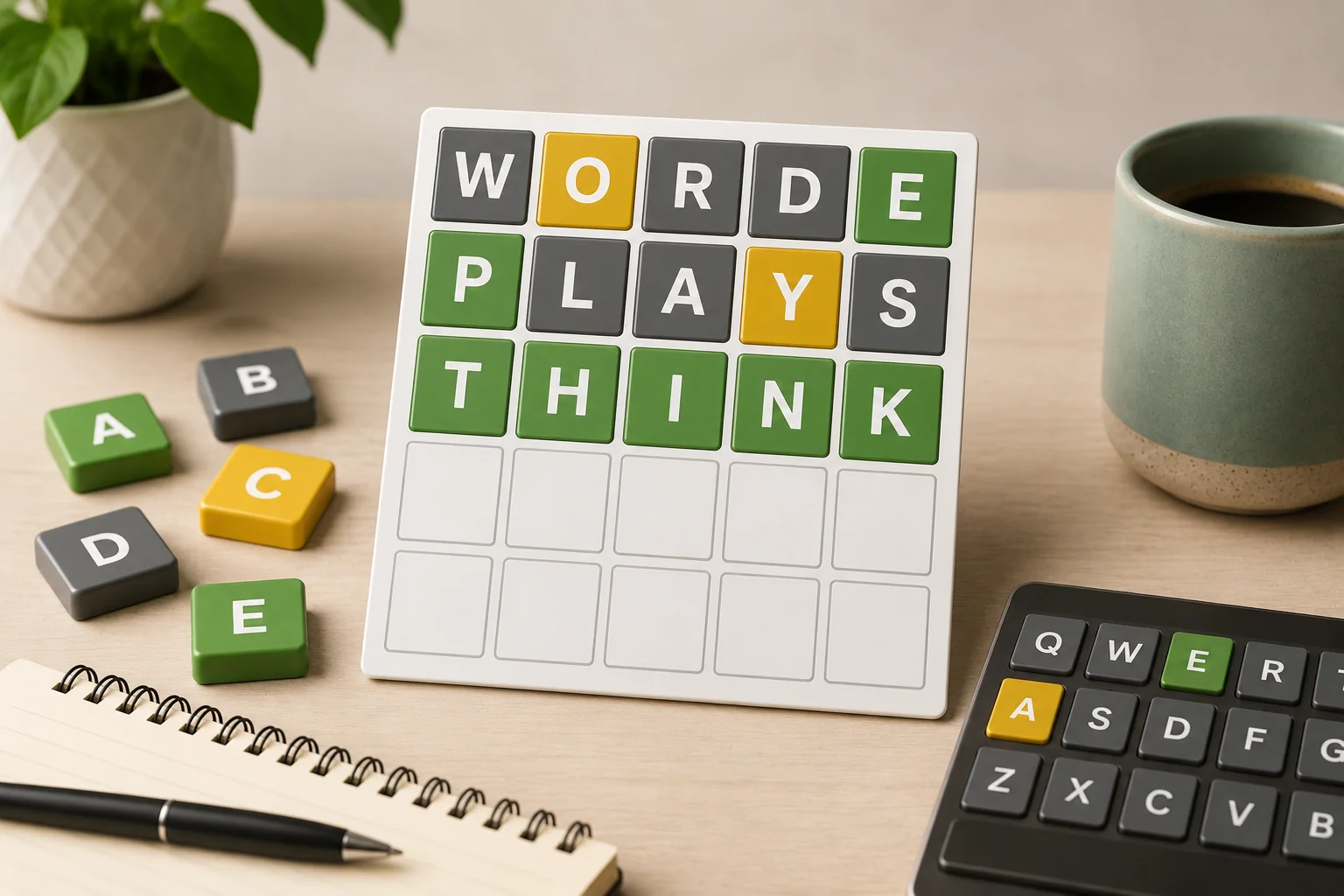
The colored clues are the most important part of Wordle. A green letter means the letter is correct and appears in the correct position. A yellow letter means the letter exists in the answer but has been placed in the wrong position. A gray letter generally indicates that the letter is not part of the answer.
These clues should be considered together rather than separately. If a letter turns green, its position has been confirmed. If it becomes yellow, the player knows the letter must appear somewhere else. Gray letters can usually be removed from future guesses, although repeated-letter situations require careful attention. Understanding these clues makes the puzzle a process of elimination rather than random guessing.
Choosing a Good Starting Word
The first guess can provide valuable information because it has no previous clues to guide it. A useful starting word usually contains several common letters and a mixture of vowels and consonants. The purpose is not necessarily to guess the answer immediately but to gather information.
For example, a starting word containing several frequently used letters can reveal whether those letters are present in the hidden word. Using a variety of letters can also help identify the general structure of the answer. Players may develop their own favorite opening words as they gain experience, but there is no single starting word that guarantees success.
Why Vowels Matter
Vowels can be particularly useful during early guesses because many English words require one or more of them. Testing several common vowels can help players understand the structure of the hidden word.
However, players should not assume that every answer contains several different vowels. Some five-letter words contain only one main vowel, while others can include repeated vowels. Therefore, vowel testing should be combined with consonant testing rather than becoming the only strategy. Once some vowel positions are known, players can focus their guesses on likely word patterns.
Using Green Letters Correctly
Green letters provide some of the strongest clues because they confirm both the letter and its position. Once a letter turns green, players should normally keep it in the same position in subsequent guesses.
For example, if the third position becomes a confirmed letter, future guesses can be designed around that fixed position. This reduces the number of possible words. As additional letters become green, the puzzle becomes increasingly constrained. Good Wordle solving involves preserving confirmed information while using new guesses to discover the remaining letters.
Using Yellow Letters Correctly
Yellow letters are useful because they confirm that a letter belongs somewhere in the answer but not in the position where it was guessed. Players should remember the letter while deliberately moving it to another position in the next attempt.
One common mistake is repeatedly placing a yellow letter in the same position. Doing so wastes an opportunity to test new information. Instead, consider the remaining positions and build a word that moves the yellow letter while also testing another useful character.
Understanding Gray Letters
Gray letters help players eliminate possibilities. If a letter is confirmed as absent, there is generally little reason to include it in future guesses. This gradually reduces the number of possible answers.
However, players should pay attention to repeated letters. Wordle can contain repeated characters, and the feedback for a repeated letter may require careful interpretation. A letter appearing once in a guess does not always mean the answer contains exactly one occurrence. Understanding how individual letter feedback interacts with repeated letters becomes increasingly important for harder puzzles.
How to Play Wordle Using Elimination
Learning how to play Wordle effectively involves more than finding correct letters. It also requires eliminating incorrect possibilities. Every gray letter removes words containing that letter, while yellow and green clues restrict where confirmed letters can appear.
Suppose several letters have already been eliminated and two positions are confirmed. Instead of choosing a random word, think about which remaining five-letter words match the known pattern. This process can dramatically reduce the possibilities. Strong Wordle players often think in terms of patterns rather than individual letters.
Avoiding Repeated Guesses
Repeating the same unsuccessful guess usually provides little additional information unless there is a specific reason to test it again. Once the clues have been recorded, the next guess should ideally provide new information.
Players can use their available attempts strategically by testing unconfirmed letters or exploring alternative positions. A good guess may not immediately look like the likely answer, but it can reveal several useful letters. Information gathering is especially valuable during the early stages of the puzzle.
Thinking About Word Patterns
English contains many common five-letter patterns. Recognizing these patterns can make Wordle easier. Common endings, beginnings, consonant combinations, and vowel arrangements can help players generate possible answers.
For example, once several positions are known, players can mentally search for familiar word structures that fit the pattern. Reading regularly can improve this ability because exposure to different words creates a larger mental vocabulary. Word games can therefore benefit from both logical reasoning and general language knowledge.
Handling Repeated Letters
Repeated letters are among the more challenging aspects of Wordle. A hidden word may contain the same letter twice, and the feedback may not always be immediately obvious to a beginner.
If a familiar letter appears as correct in one position but another occurrence receives different feedback, consider the possibility that the answer contains multiple instances of that letter. Players should carefully compare the feedback from the entire guess. Repeated-letter situations are a good reason to slow down rather than making a quick assumption.
Common Mistakes Beginners Make
New players often focus too heavily on trying to guess the answer immediately. This can cause them to overlook useful clues. Another common mistake is ignoring yellow letters, forgetting gray letters, or repeatedly testing letters that have already been ruled out.
Some players also become overly focused on rare words when a common word is more likely to fit the available clues. Wordle rewards logical deduction, so players should first consider ordinary words that match the established pattern. As experience grows, players naturally become better at recognizing less obvious possibilities.
How to Improve Your Wordle Skills
Improving at Wordle takes practice. One effective method is to review each completed puzzle and consider which clues were most useful. If a puzzle was solved quickly, think about why the guesses worked. If it was difficult, identify where unnecessary guesses were made.
Expanding vocabulary can also help. Reading books, articles, and other forms of writing exposes players to words they may not normally use. Learning prefixes, suffixes, common letter combinations, and unusual spelling patterns can further improve word recognition.
Using Logic Instead of Guessing Randomly
Random guessing can occasionally produce a correct answer, but it is not an efficient long-term strategy. A better approach is to treat every guess as an information-gathering opportunity. Before submitting a word, consider what you already know and what the new guess could reveal.
For example, if several letters have been ruled out, choose a word containing untested letters. If multiple positions are confirmed, construct a word that fits the established pattern. This approach turns each attempt into part of a larger deduction process.
The Educational Value of Wordle
Wordle can also provide educational benefits because it encourages players to think about spelling, vocabulary, letter placement, and word structure. Players may encounter unfamiliar words and become curious about their meanings.
Teachers and parents can use word puzzles as informal vocabulary activities, particularly when players discuss the meaning and spelling of the daily word after solving it. The game can make language practice feel more like entertainment than traditional study. However, its main purpose remains recreational, and players should approach it as a fun way to exercise their language skills.
Why Wordle Remains Popular
Wordle’s popularity comes partly from its simplicity and limited format. The daily puzzle gives players a small challenge without requiring a large time commitment. Because everyone works on the same daily word, players can also discuss their results with friends and family without immediately revealing the answer.
The combination of deduction, vocabulary, and routine creates a satisfying experience. Players can return each day, apply what they have learned, and gradually develop better solving habits. Its straightforward design makes it accessible to people with very different levels of gaming and word-game experience.
How to Play Wordle More Strategically
For anyone learning how to play Wordle, the most useful strategy is to combine several techniques instead of depending on one trick. Start with a word containing useful letters, carefully record the clues, preserve green positions, move yellow letters, eliminate confirmed gray letters, and consider common word patterns.
As the puzzle progresses, reduce the number of possibilities rather than increasing them randomly. When only a few options remain, compare their spelling and letter placement carefully. A calm, systematic approach can be more effective than rushing toward an answer.
Conclusion
Learning how to play Wordle is straightforward because the basic rules are simple, but becoming consistently skilled requires practice, vocabulary, and logical thinking. Players need to understand the meaning of the different letter clues, choose useful guesses, eliminate impossible letters, recognize word patterns, and pay attention to repeated characters. Each guess should ideally provide useful information rather than simply being a random attempt. Over time, players can develop strategies that make difficult puzzles easier to approach. Wordle also offers an enjoyable way to practice spelling and vocabulary while solving a short daily challenge. Whether you are completely new to the game or looking to improve your results, focusing on clues, patterns, and thoughtful elimination can make the experience more rewarding.