


Introduction
Wordle has become a widely recognized word puzzle for people who enjoy short, challenging games that can be completed in just a few minutes. The basic concept is simple: players try to discover a hidden five-letter word within a limited number of attempts. After every guess, the game provides visual clues that help players understand which letters are correct and where they belong. Although the rules are easy to learn, finding the answer can require vocabulary knowledge, logical thinking, pattern recognition, and careful decision-making. Unlike many games that demand long sessions, Wordle offers a compact daily challenge that can fit naturally into a morning routine, work break, or evening relaxation. Its combination of simplicity and mental challenge has helped make the format appealing to casual players and dedicated puzzle enthusiasts alike.
What Is Wordle?
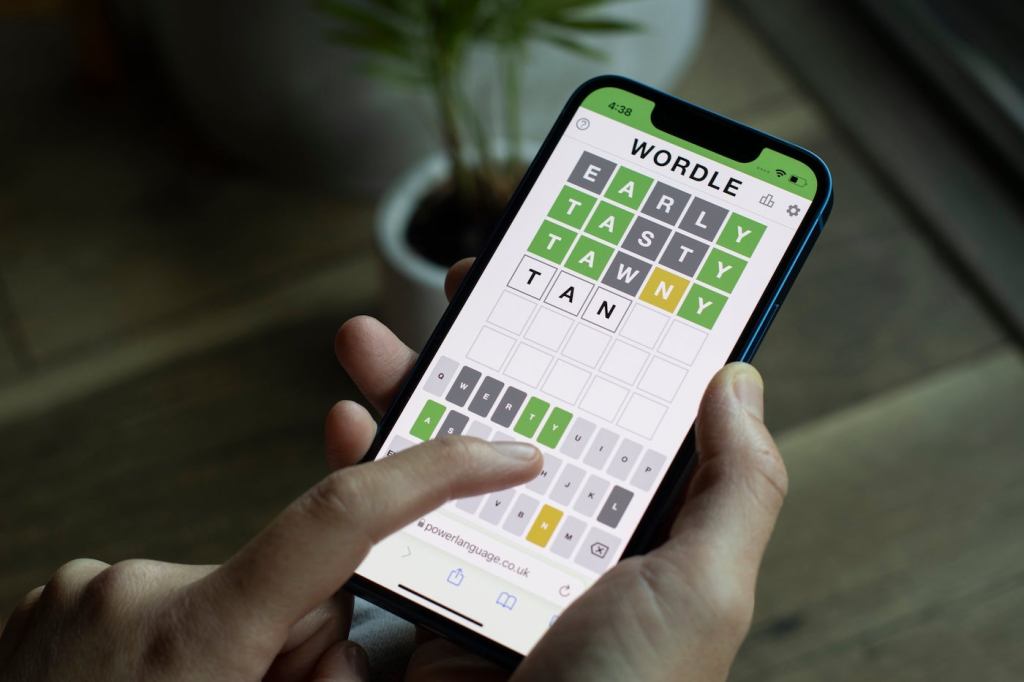
Wordle is a word-guessing puzzle built around a hidden five-letter word. Players generally have six opportunities to identify the correct answer. Each guess must contain the required number of letters, and the game responds by showing clues for individual letters. A correctly placed letter is usually marked differently from a letter that appears in the answer but is positioned incorrectly. Letters that do not occur in the solution are also identified, allowing players to eliminate possibilities.
The appeal of Wordle comes from the way these clues gradually narrow the possible answers. A first guess may reveal only one useful letter, while a later attempt can provide several important pieces of information. Players therefore need to balance vocabulary with logic rather than simply guessing random words. The limited number of attempts also creates a sense of pressure without making the game overly complicated.
How the Game Works
The objective is straightforward, but understanding the feedback system is essential. A player enters a five-letter word and submits it as a guess. The game then evaluates every letter according to its relationship with the hidden word. A letter in the correct position indicates a strong clue because the player knows both the character and its location. A letter that belongs to the answer but appears in another position provides useful information as well. Letters absent from the answer can be removed from future guesses.
This process turns each attempt into an information-gathering exercise. Instead of thinking only about the next possible answer, experienced players consider what their current guess can reveal. A strong guess may identify several different letters even when it does not resemble the final solution. Over successive attempts, the number of realistic possibilities becomes smaller, making the puzzle easier to solve through deduction.
Why Wordle Became So Popular
One reason for the popularity of Wordle is its accessibility. Players do not need advanced gaming experience, specialized knowledge, or a large amount of free time. The rules can be understood almost immediately, while each puzzle still provides enough uncertainty to remain interesting. The daily structure also creates anticipation because players have a new challenge rather than an endless collection of puzzles competing for attention.
Another important factor is the social aspect of the format. Players can discuss their results with friends or compare how many attempts they needed without necessarily revealing the solution. This makes the game suitable for casual conversations and friendly competition. The familiar grid-based result format also gives players a simple way to communicate their experience. These qualities helped transform a small word puzzle into a recognizable daily activity for many puzzle fans.
Choosing a Strong First Guess
The opening guess can influence the entire solving process. Rather than selecting a word simply because it comes to mind, many players prefer words containing several frequently used letters. A useful opening word can test multiple vowels and common consonants, increasing the amount of information gained from the first attempt.
However, there is no single first guess that guarantees success. A word containing common letters may reveal useful information, while another player may prefer a word that tests a different combination. The most important principle is to avoid wasting an early attempt on a word with repeated letters unless there is a specific reason to do so. The first move should ideally help reduce uncertainty and create a foundation for the next guess.
Using Vowels Effectively
Vowels can play an important role when solving Wordle because many five-letter English words contain several of them. Identifying whether common vowels such as A, E, I, O, or U appear in the hidden word can quickly narrow the search. A first or second guess that tests multiple vowels may therefore provide valuable information.
At the same time, players should avoid assuming that every puzzle contains several different vowels. Some answers may use only one vowel, while others can contain the same vowel more than once. Once a vowel has been confirmed or eliminated, future guesses should reflect that information. Treating vowel clues carefully can prevent players from repeatedly testing letters that have already been ruled out.
Understanding Letter Position
Knowing that a letter belongs to the answer is only part of the puzzle. Its position matters just as much. Suppose a player discovers that a particular consonant appears in the hidden word but is not in the position used in the original guess. That information should immediately influence subsequent attempts.
Players can mentally create fixed and flexible positions. Correctly placed letters become fixed, while misplaced letters should be moved to alternative locations. This simple method reduces unnecessary guesses and makes the solving process more systematic. Instead of generating completely new words each time, players can build possibilities around the information already discovered.
Managing Repeated Letters
Repeated letters can make some puzzles considerably more difficult. A player may identify a letter and assume it appears only once, even though the answer actually contains it twice. Conversely, a guess containing duplicate letters may produce feedback that requires careful interpretation.
When a known letter seems to fit several possible positions, players should consider whether repetition could explain the clues. This is especially useful when most common alternatives have already been eliminated. Paying attention to letter frequency and repeated-character possibilities can prevent an otherwise promising solving path from becoming stuck.
Avoiding Random Guessing
Random guessing may occasionally produce the correct answer, but it is generally less effective than using information strategically. Every attempt represents one of a limited number of opportunities, so guesses should ideally have a purpose. When several possible answers remain, a player can choose a word that tests important letters and distinguishes between those possibilities.
For example, if two candidate words share the same known letters but differ in their middle characters, an informative guess can test those uncertain letters. This approach may not immediately solve the puzzle, but it can reveal enough information to make the next attempt much more precise. Logical elimination is one of the most useful skills for improving consistency.
Common Mistakes Players Make
New players often make a few predictable mistakes. One is ignoring information from previous attempts. Once a letter has been confirmed as absent, continuing to use it wastes an opportunity. Another mistake is keeping a correctly positioned letter fixed without considering whether the remaining letters can form a realistic word.
Players may also become too focused on one possible answer. English contains many words with similar letter patterns, so an early assumption can lead to repeated guesses that provide little new information. Staying flexible and allowing the clues to change the original theory is a better approach. The goal is not to prove that the first idea was correct but to use the available evidence to find the actual solution.
Building a Better Solving Strategy
A reliable strategy begins with information gathering. Start with a word that contains useful, common letters and then study every piece of feedback carefully. Separate confirmed letters from misplaced letters and eliminated letters. This creates a mental framework for the remaining guesses.
The next stage is pattern recognition. If the clues suggest a structure such as a known consonant followed by two uncertain positions and a confirmed ending, think of words that fit that pattern. Do not focus only on the most obvious possibility. Consider grammatical forms, common word combinations, and less familiar vocabulary when appropriate.
As the number of possibilities decreases, shift from broad exploration to precise testing. At this stage, each guess should ideally distinguish between a small group of remaining candidates. This combination of exploration and elimination can make Wordle solving more efficient.
Improving Vocabulary Through Wordle
Playing Wordle can also encourage vocabulary development. Players encounter words they may not use regularly and become more aware of spelling patterns, common letter combinations, and word structures. Even when a puzzle is not solved, reviewing the answer can provide an opportunity to learn a new term.
The game can be particularly useful for recognizing patterns in five-letter words. Players may become more familiar with endings, prefixes, consonant combinations, and vowel arrangements. Over time, this familiarity can make future puzzles easier because the player has a larger mental collection of possible words.
Wordle as a Daily Mental Exercise
A short word puzzle can provide a simple form of mental stimulation. Solving requires attention, memory, language processing, and logical elimination. Because a typical session is brief, it can be incorporated into a daily routine without requiring a significant time commitment.
The challenge also encourages patience. When the answer does not appear immediately, players must work with incomplete information rather than rushing toward a random solution. This makes the experience different from games based primarily on speed. The satisfaction comes from gradually transforming limited clues into a complete answer.
How Beginners Can Get Better
Beginners should focus less on solving every puzzle immediately and more on understanding why particular guesses are useful. After each game, consider which letters were discovered early, which guesses provided little information, and where the solving process became difficult. This kind of review can gradually improve decision-making.
It is also helpful to expand vocabulary naturally by reading books, articles, puzzles, and other forms of written material. A larger vocabulary increases the number of words a player can recognize when a pattern appears. However, vocabulary alone is not enough. The strongest improvement comes from combining word knowledge with careful analysis of the available clues.
The Social Side of Word Puzzles
The daily nature of Wordle gives players a shared activity that can be discussed without requiring a major time commitment. Friends, family members, and colleagues can compare their number of attempts or discuss challenging patterns. Because the result can be communicated without immediately revealing the answer, conversations can remain spoiler-free.
This social quality adds another layer to the puzzle. Some people enjoy competing with others, while others simply like knowing that people around them are attempting the same challenge. The combination of individual problem-solving and shared participation has helped maintain interest in the format.
Conclusion
Wordle combines simple rules with a surprisingly deep process of deduction. Players must identify useful letters, understand their positions, eliminate impossible choices, and adapt their guesses as new information appears. The game rewards patience and logical thinking rather than relying entirely on vocabulary or luck. Strong opening guesses, careful use of vowel information, attention to repeated letters, and strategic elimination can all improve the solving experience. At the same time, there is no requirement to approach every puzzle in exactly the same way. Different players can develop different methods while enjoying the same daily challenge. Whether played casually or as a regular mental exercise, Wordle remains an accessible way to practice language skills, recognize word patterns, and enjoy a short but engaging puzzle.